Cash App
The brief was a visual polish job. I turned it into a prevention strategy.
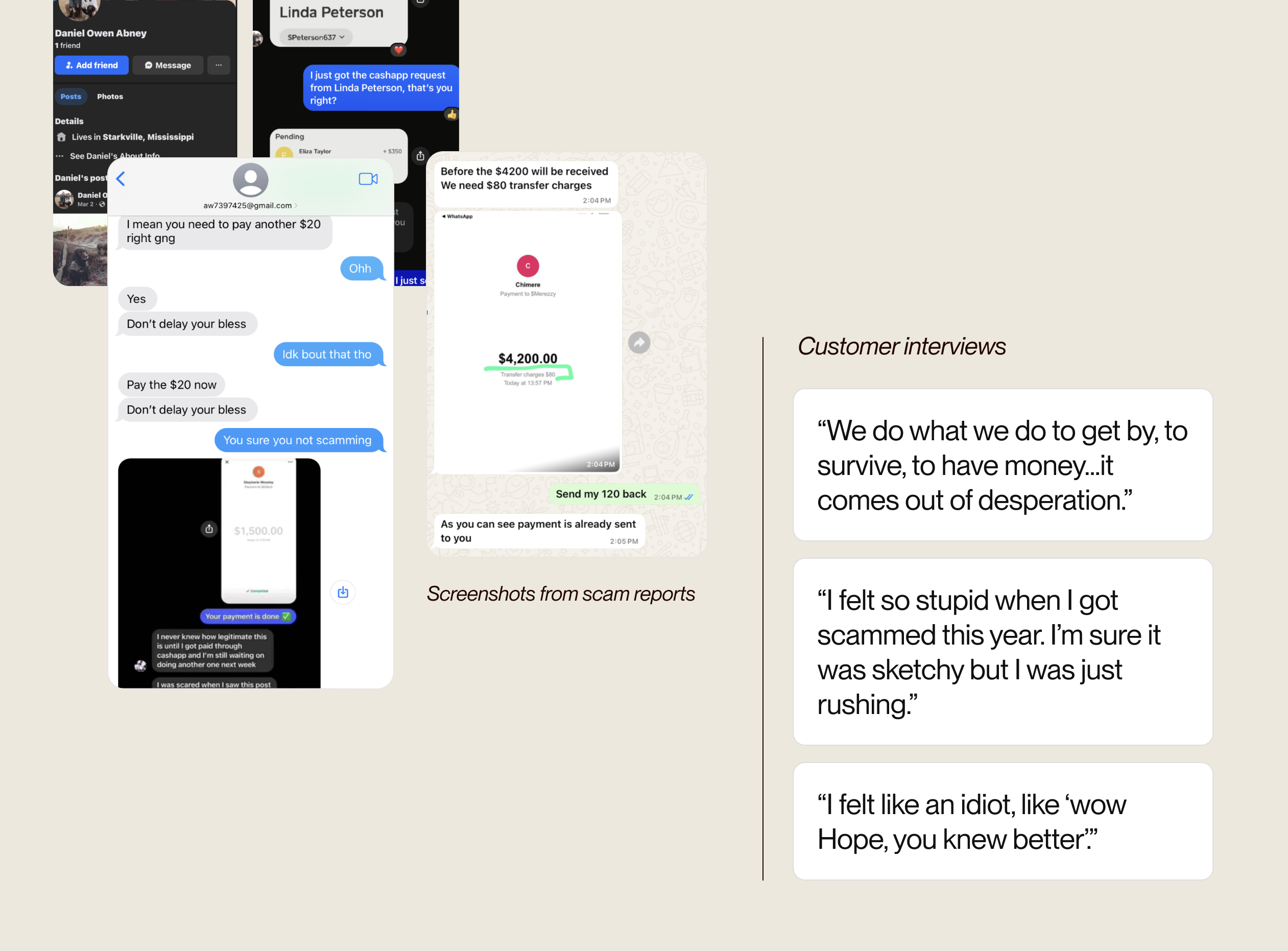
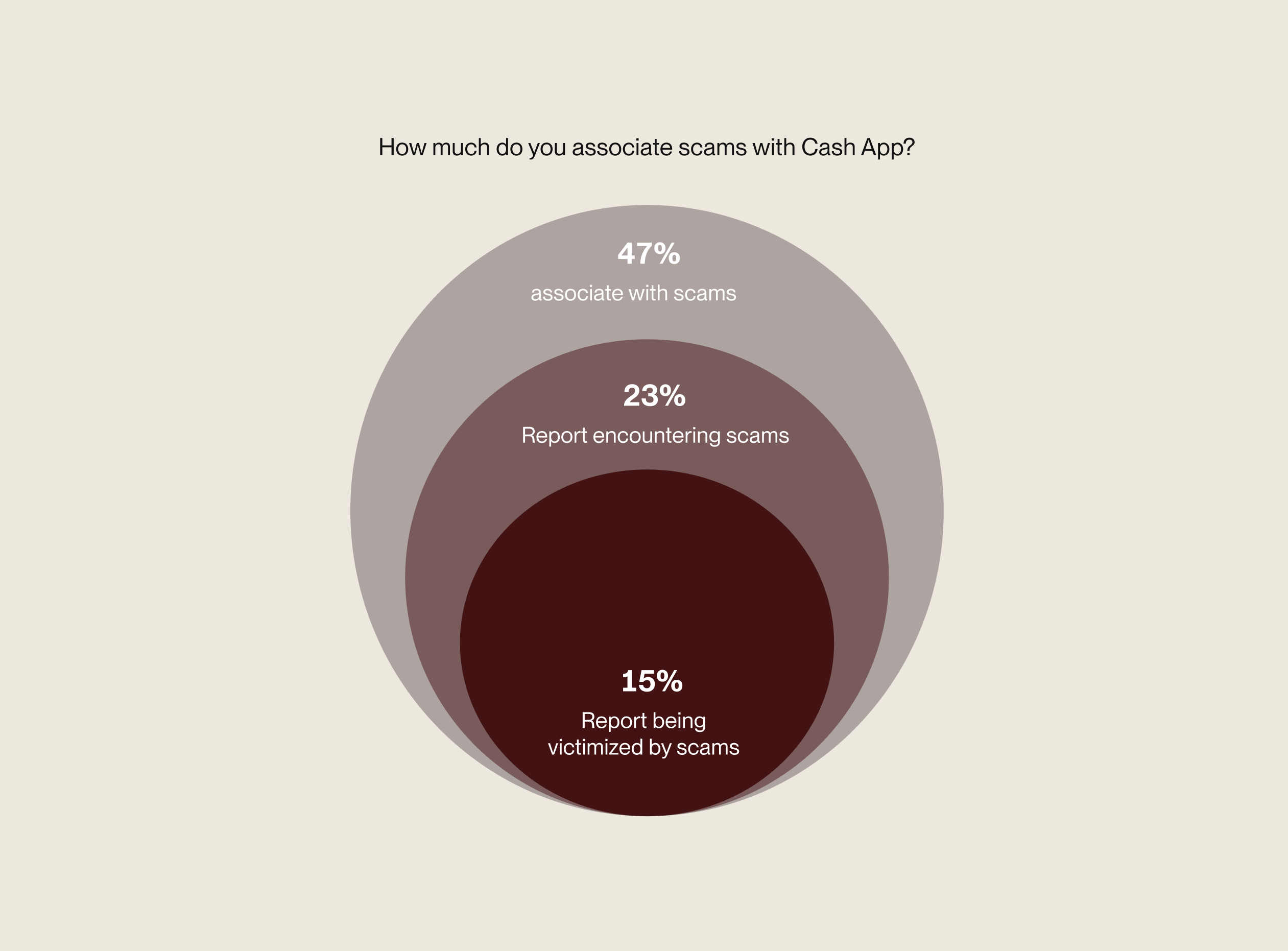
Scams originate off-platform, then are completed in Cash App through peer-to-peer payments. Scams are the #1 detractor of trust on Cash App, with $266M lost annually in gross profit volume financial from churn caused by scams.
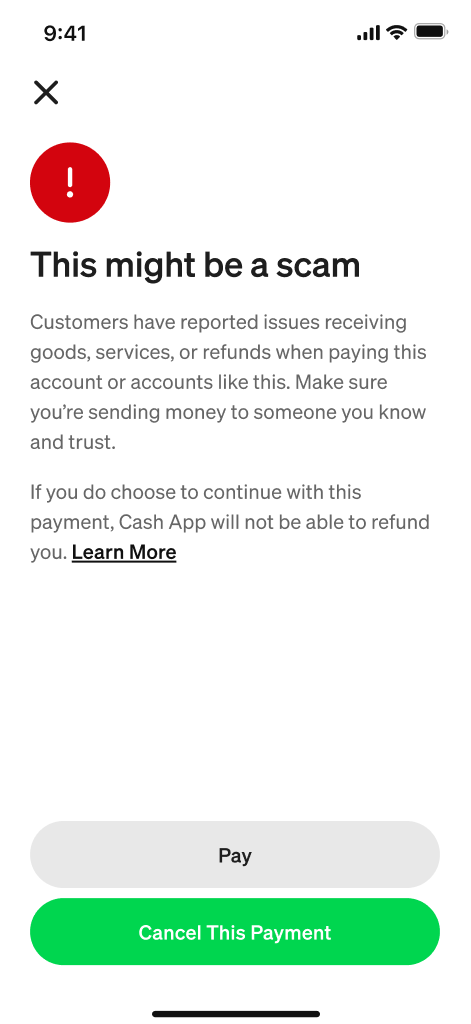
Cash App's machine learning models for detecting payments for scams are awesome and sophisticated, but 77% of these warnings were ignored and customers still proceeded. The only thing standing between customers and scammers was this single screen, and it wasn't working. Since the ML team didn't have dedicated product and design resources, the ask was to make the warning better.
The existing warning screen
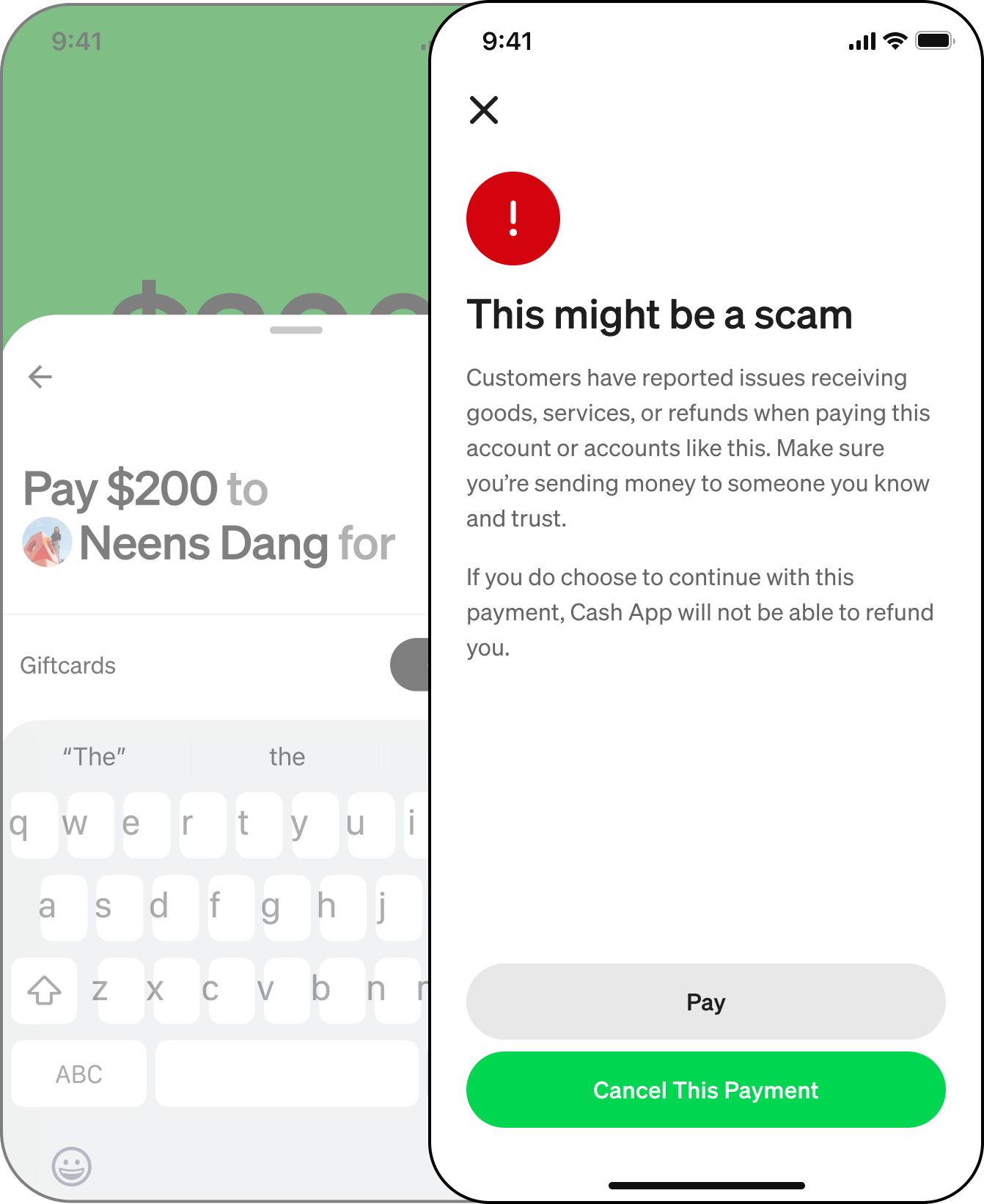
I agreed with the ask, but I wanted to understand why it was failing. It seemed the bigger problem was that the warning was the only intervention we had. So, I set out to explore: what else could we do to stop scams besides the warning?
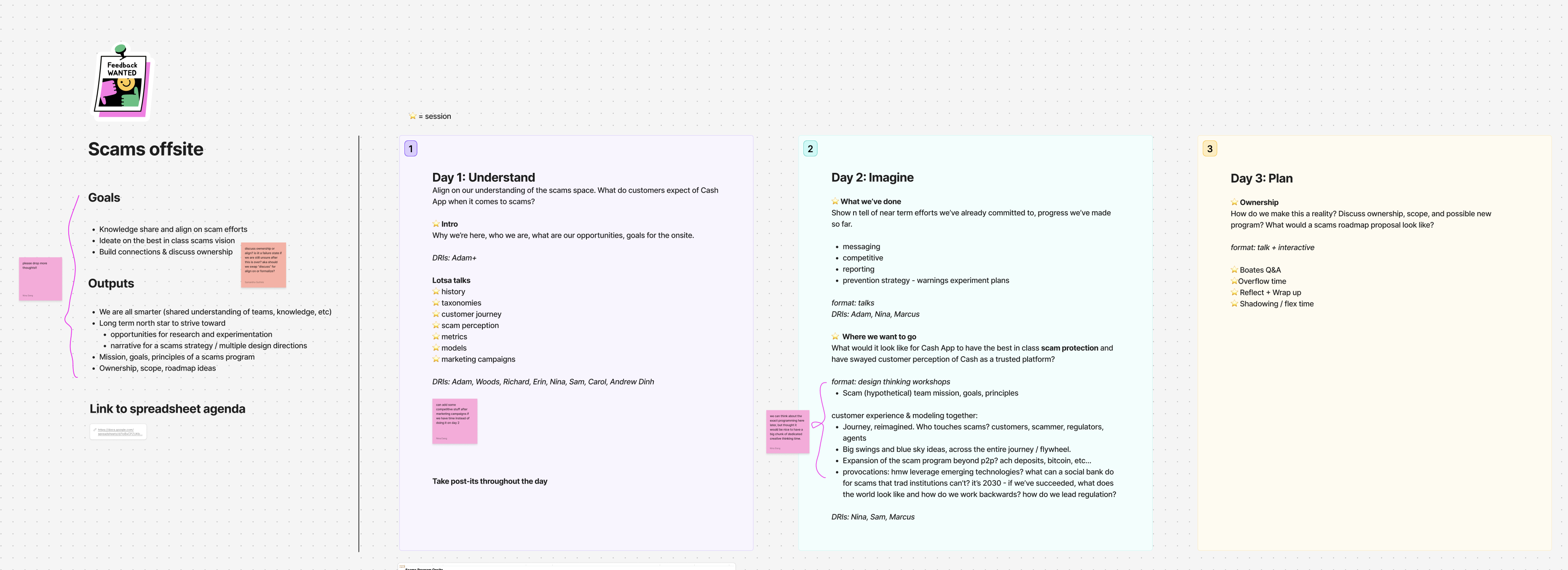
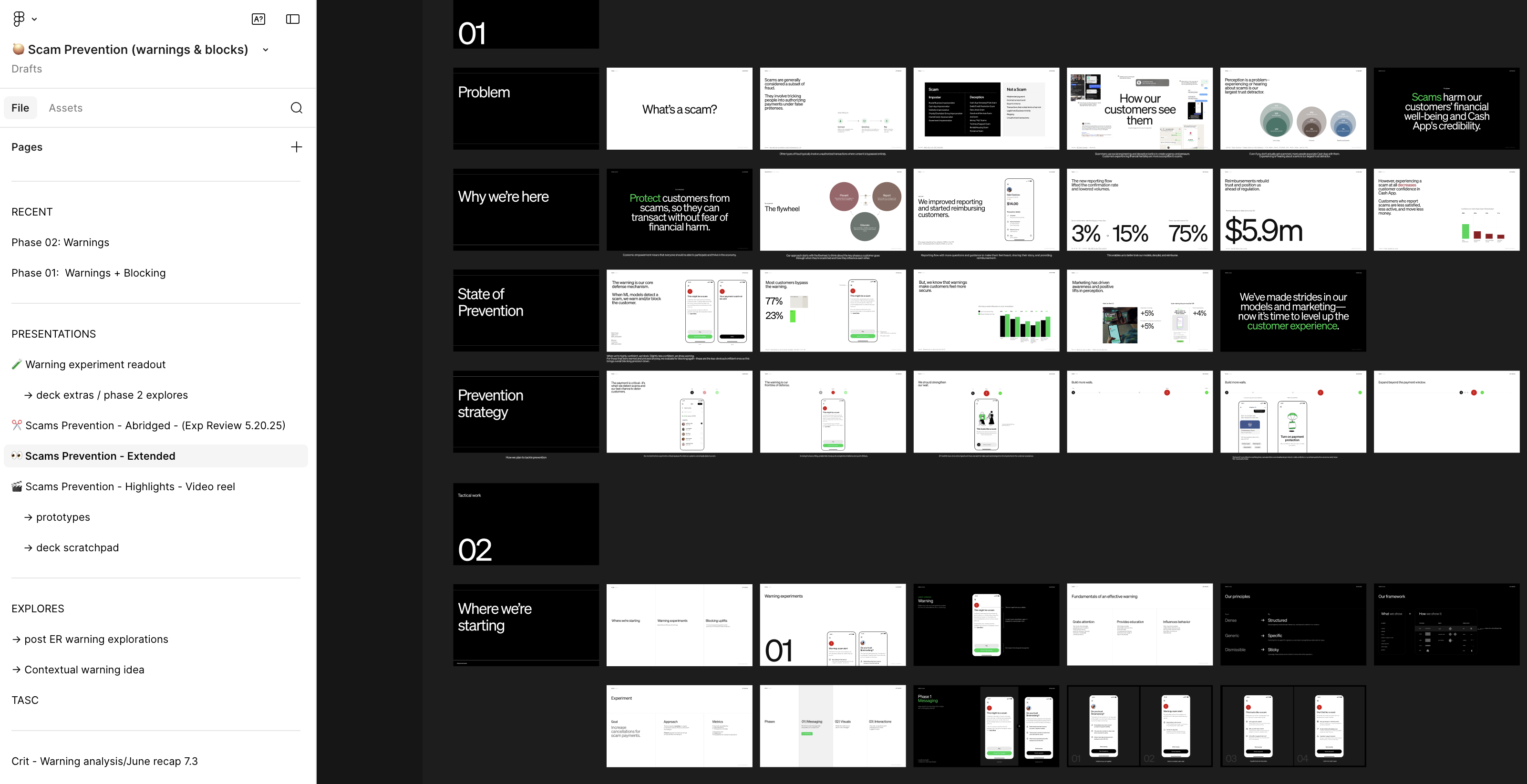
This was a grassroots workstream alongside my primary role on the Disputes team. A formal "Scams" team didn't exist, so momentum and conviction were important to maintain here. I organized and facilitated sessions at an offsite to kick off the work, gathering folks across the org who worked in the scams space. From machine learning engineers to customer support, we came together to knowledge share and co-create our vision.
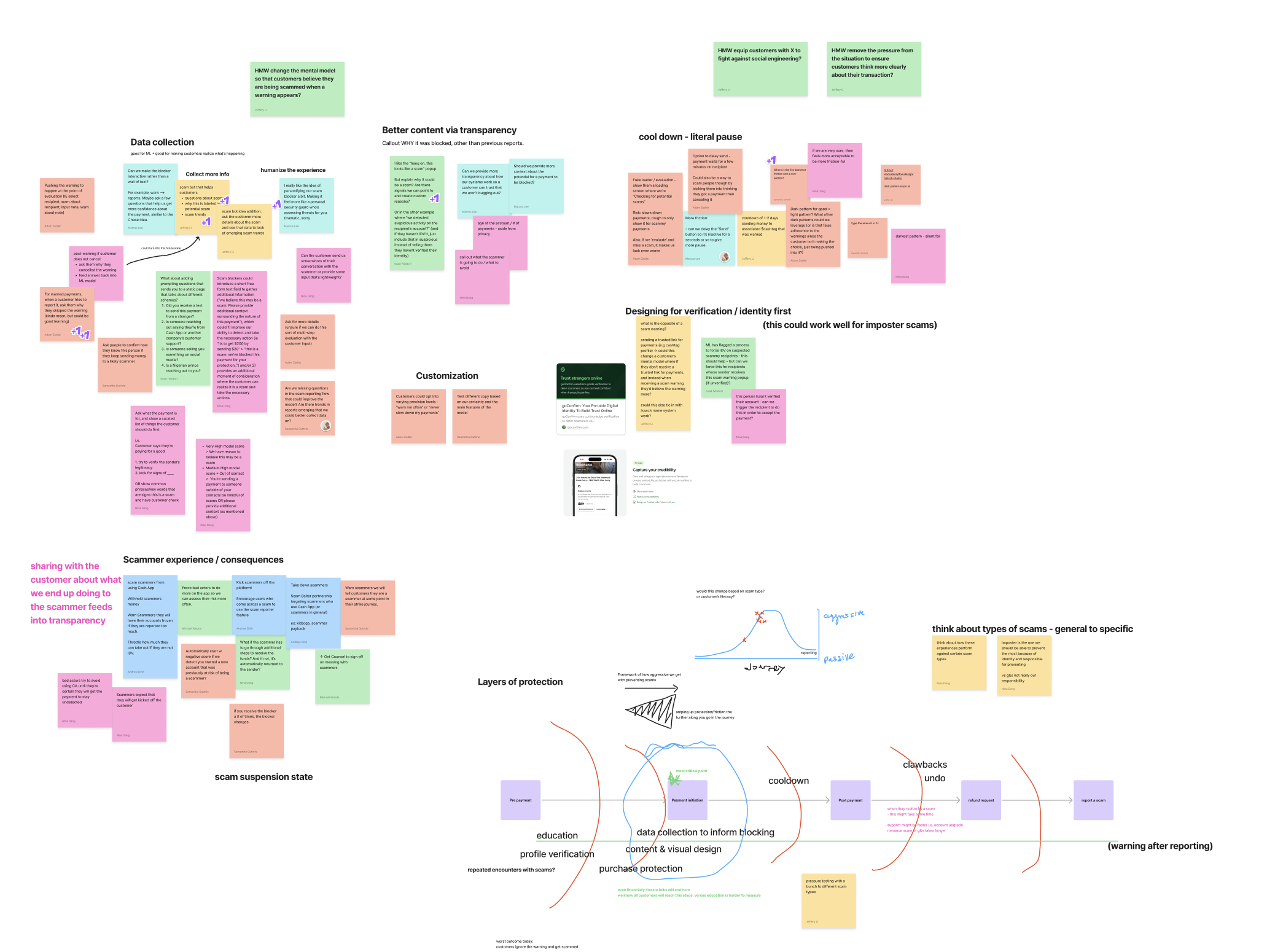
I synthesized our ideas, and as I was organizing them against when they could appear in the customer journey the strategy emerged. If we could improve interventions in frequency, and earlier, before the stakes are high, we'd increase our chances of customers seeing through the scam. I ran with that belief and reframed the problem from a single fix into a larger opportunity as a layered prevention strategy.
Offsite prep
Design came in two major phases. The first was a vision deck, which conveyed the problem, business opportunities, and the proposed strategy: we need to strengthen our warning, build more walls, and expand beyond the payment window.
To build stakeholder appetite, I created concepts and prototypes for ideas like AI-assisted warnings, education modules, and recovery tools that mapped to the layered prevention strategy.
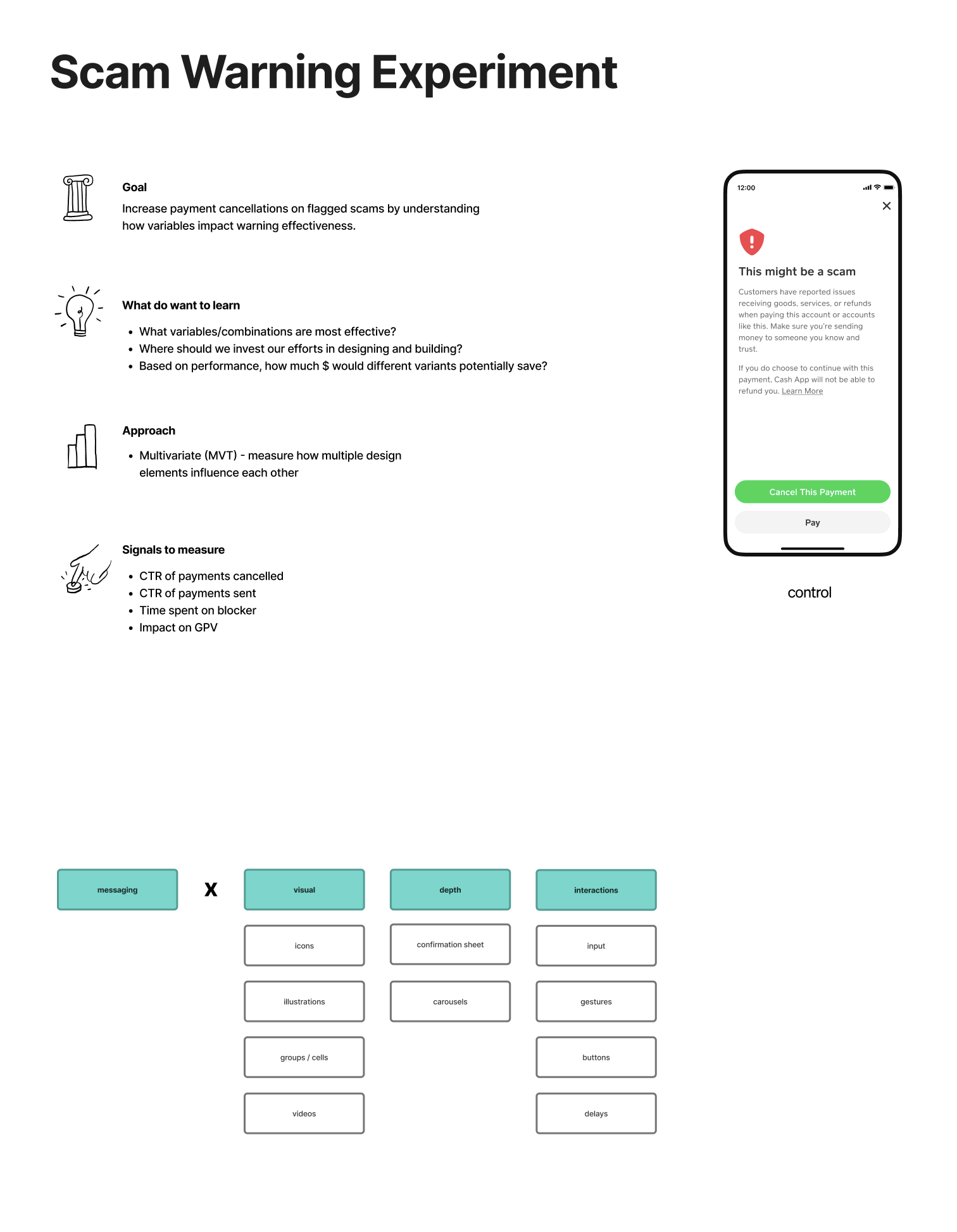
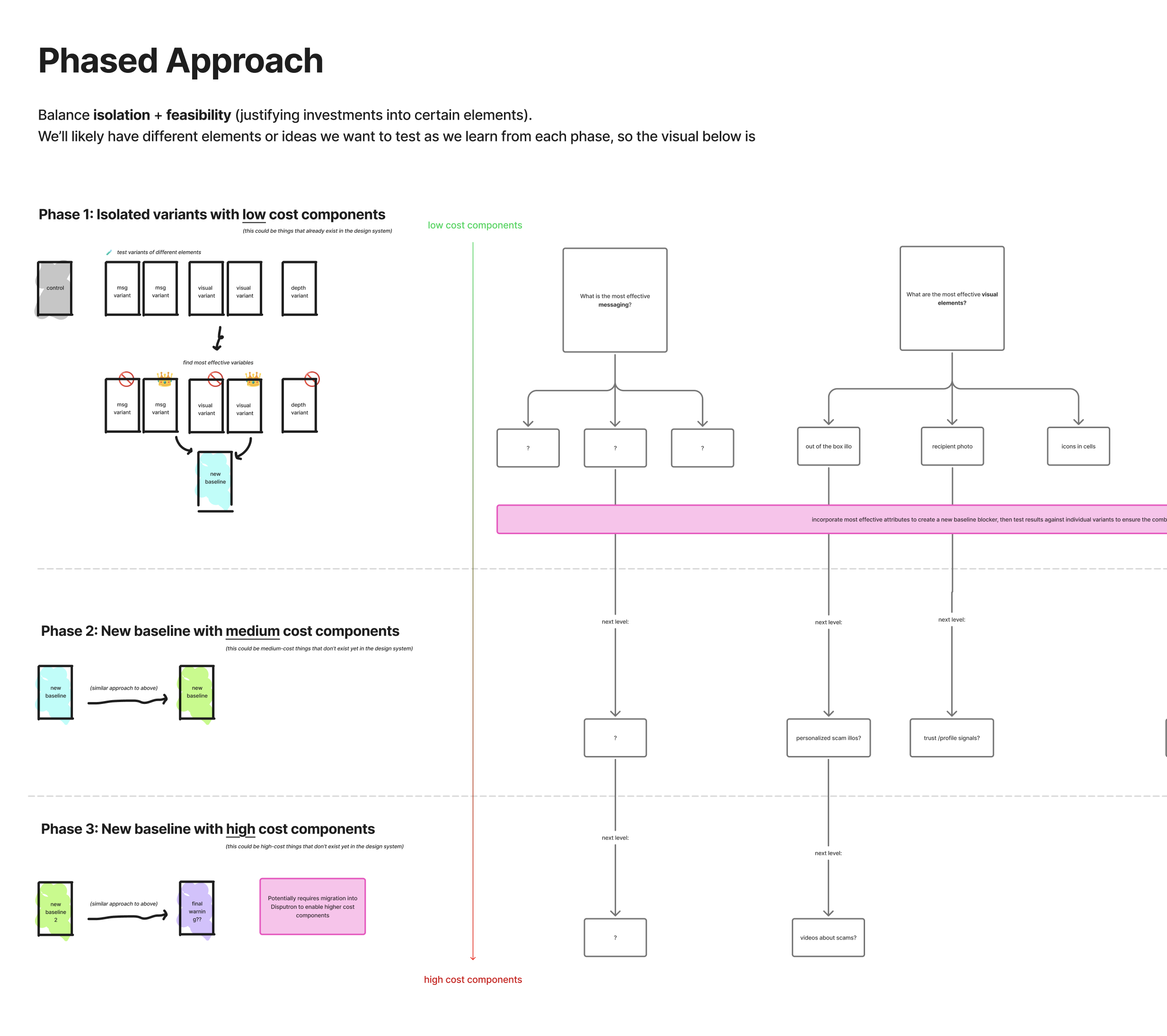
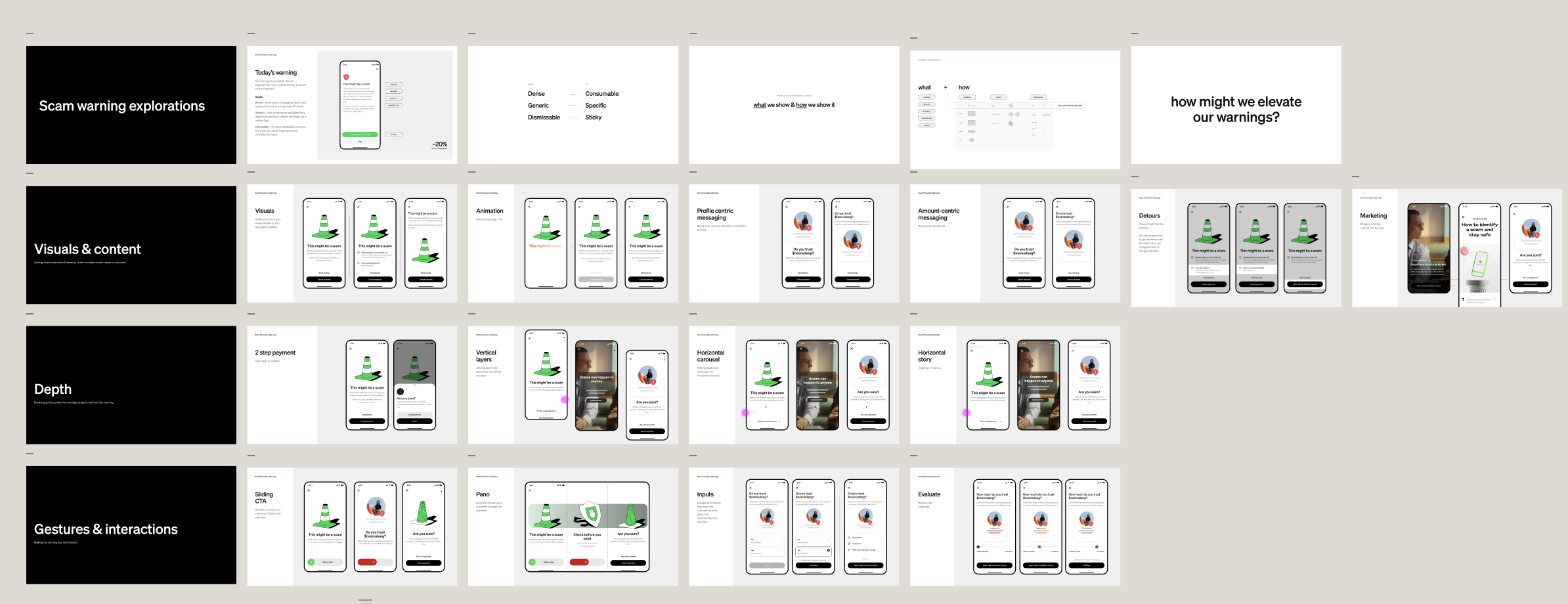
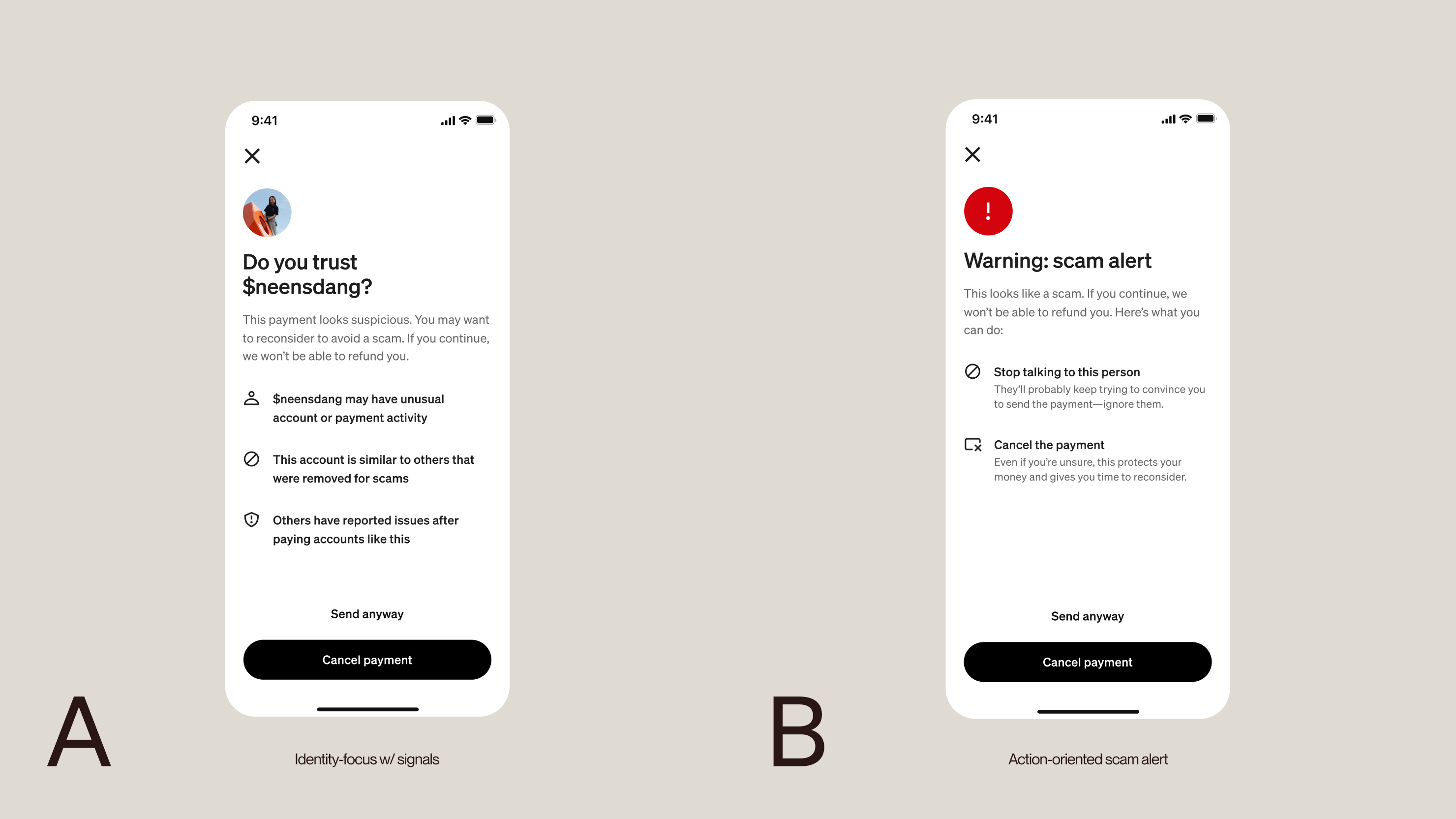
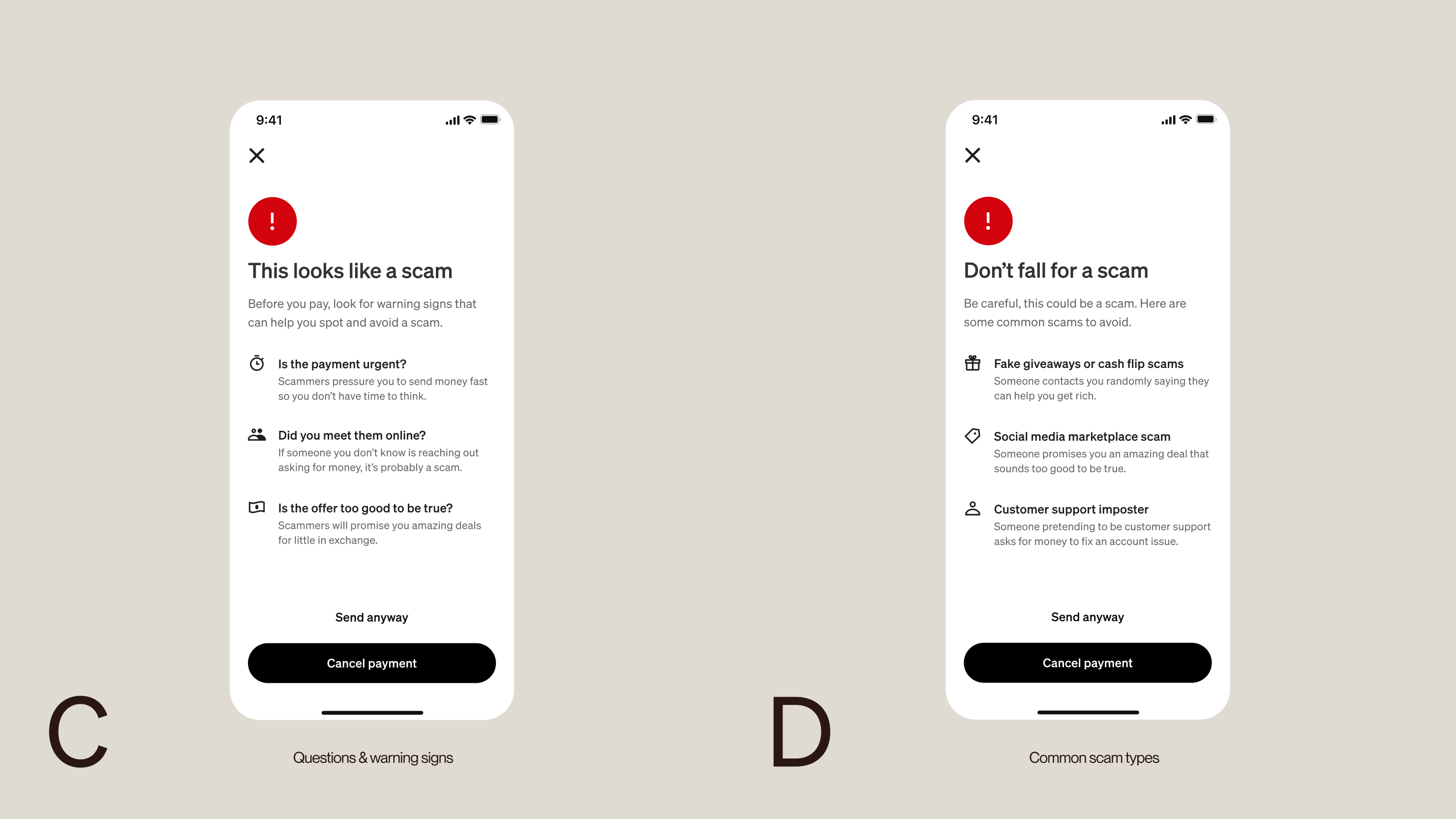
The second was for an experiment: a breadth of explores and narrowing to 4 variants built around a variable prevention strategy, designed to understand what actually convinces someone to cancel a payment, not just what looks better visually. I partnered with Content Design and Data Science to run a 4-variant messaging experiment, isolating variables to build real on what's effective.
Offsite prep
"Strengthen the wall" concept
Warning experimentation: explores
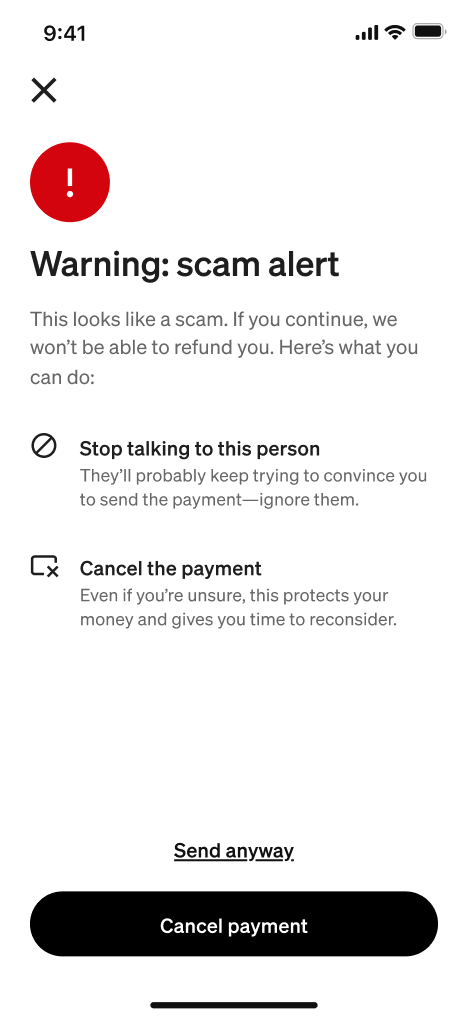
Warning redesign: before & after